Wednesday, November 6, 2013

Sources

WebMD.Com
CDC.gov
Healthy.NY.gov
Mayoclinic.org

Age

About 25% of all adults, mostly otherwise healhy, will get shingles during their lifetime, usually after age 50. The incident increases with the age so that shingles is 10 times more likely to occur in adults over 60 than in children under 10. 

People with compromised immune system, from use of immunosuppressive medications such as cancer, or from infection of HIV are at increased risk of developing shingles. Shingles is also common in people who are under prolong stress. These individuals also can have re-eruptions and some may have shingles that never heals. Most people who get shingles re-boost their immunity to VZV and will not get the disease for another few decades.

Younger kids whose mother had chickenpox late in pregnancy 5 to 21 days before giving birth or who had chickenpox in infancy, have an increased risk of pediatric shingles. Sometimes these children are born with chickenpox or develop a typical case within a few days.


SHINGLES


Tuesday, November 5, 2013

What is shingles?

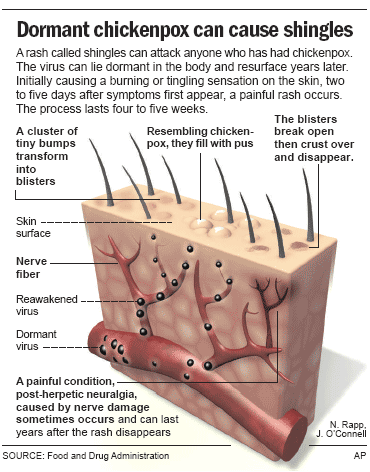
Shingles is caused by the same virus that cause chickenpox, the herpes varicella-zoster virus, or simply the sister virus.

Most people get chickenpox when they are children. However, after the chickenpox is gone, the virus stays in our nervous system in a inactive state. The virus does not become active because our immune system keeps it in check.

Later in life the sister virus can become reactivated. If this occurs it causes shingles. Shingles is an infection of a nerve and the area of skin around it.


Who should get the vaccine?

CDC recommends Zostavax for use in people 60 years and older to prevent shingles. This is a one time vaccination. There is no maximum age for getting the shingles vaccine.

Anyone 60 years of age or older should get the shingles vaccine, regardless of whether they recall having had chickenpox or not. 

CDC does not recommend for routine use of sningles vaccine in people who are 50-59 years of age. However, the vaccine is approved by the FDA for people in this age group.

Even if you have had shingles, you can still receive the shingles vaccine to help prevent future occurrences of the disease. There is no specific time that you must wait after having shingles before receiving the shingles vaccine. Generally, a person should make sure that the shingles rash has disappeared before getting vaccinated.

Who should not get the vaccine

  • A person who has ever had a life-threatning or severe allergic reaction to gelatin, the antibiotic neomycin, or any other component of shingles vaccine. 

  • A person who has weakened immune system because of
  1. HIV/AIDS 
  2. Treatment with drugs that affect the immune system, such as steroids
  3. Cancer treatment such as radiation or chemotherapy
  4. Cancer affecting the bone marrow or lymphatic chstem , such as leukemia or lymphoma

  • Women who are or might be pregnant 


Vaccine

The shingles vaccine was recommended by the Advisory Committee on Immunization Practice (ACIP) in 2006 to reduce the risk of shingles and its associated pain in people age 60 years and older.

Shingles vaccine is available in pharmacies and doctor's offices.


Mode of Transmission

  1. From shingles cases:
  • Direct contact with lesions
     2. From disseminated shingle causes, or localized shingles cases in the immuno compromised:
  • Airborne
  • Direct contact with lesions